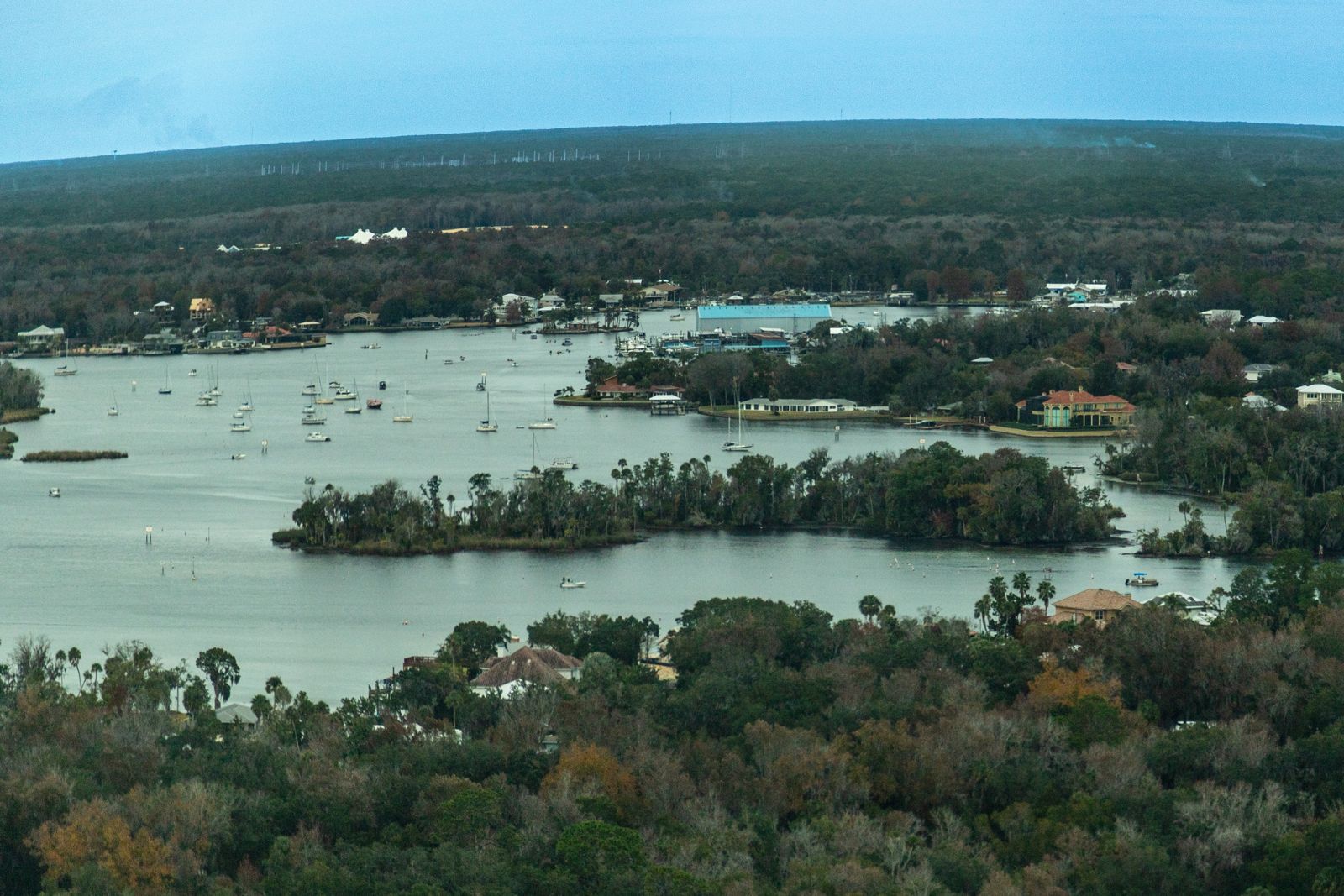
Crystal River from Orlando and Tampa: Driving, Day Tours and Where to Start
Crystal River is a small city on Florida’s Gulf Coast, and the U.S. Fish and Wildlife Service puts it one hour north of Tampa. From Orlando the drive runs west across the middle of the state, by the Florida Turnpike, I-75 and Highway 44. Either way, the last stretch is the same: Highway 19, the coast road that runs through the middle of town.
What surprises most first-time visitors is where the day actually begins. You do not “enter” Crystal River the way you enter a national park. Much of the Crystal River National Wildlife Refuge can only be reached by water, the refuge runs no tours and no boat ramps of its own, and the famous swim with manatees is run by private operators from their own docks and shops around Kings Bay. The one place you can see the springs from land, the boardwalk at Three Sisters Springs, has no public parking: you take the trolley from the City’s Three Sisters Springs Center.
This guide covers the routes from Orlando, Tampa and Gainesville, the day tour from Orlando for anyone without a car, the handful of addresses where things really start, and how to fit a swim, the boardwalk and a state park into one day.
Crystal River at a glance
Before you plan the drive, it helps to know what you are driving to.
- Kings Bay is the heart of it: a 600-acre bay at the head of the Crystal River, which is a tidal river running about six miles out to the Gulf. The Southwest Florida Water Management District counts more than 70 springs in the bay and calls it the largest natural winter refuge for manatees on Florida’s Gulf Coast.
- Most of the springs are in the eastern half of the bay, including Hunter, Tarpon Hole and Three Sisters, the names you will see on every tour listing.
- The refuge was established in 1983 and is the only national wildlife refuge in the country created specifically to protect the Florida manatee. It preserves Three Sisters Springs, the last unspoiled spring habitat in Kings Bay.
- The season runs from November 15 to March 31, when the refuge’s seven warm-water manatee sanctuaries are in effect and the manatees move into the springs to escape the cold Gulf.
So “going to Crystal River” almost always means going to Kings Bay, on the east side of town, and getting onto or beside the water there.
Driving from Tampa
Tampa is the closer of the two big airports, and the drive is simple. Citrus County’s visitor bureau gives this route:
- North on the Veterans Expressway (589) until it ends at U.S. 98.
- West on Highway 98 to Highway 19, just south of Homosassa.
- North on Highway 19 through Homosassa to Crystal River.
The refuge’s own figure for the trip is about one hour from Tampa, which matches the bureau’s description of an easy run up the coast. Traffic around Tampa itself is the main variable, so leave margin if you have a fixed tour check-in time.
Driving from Tampa also puts Homosassa on your way in. Ellie Schiller Homosassa Springs Wildlife State Park sits on that same road at 4150 S. Suncoast Blvd., which makes it an easy stop on the way home (more on it below).
Driving from Orlando
From Orlando you cross the state rather than run up the coast. The visitor bureau’s route:
- Florida Turnpike north to Wildwood.
- I-75 north for a short distance to the exit for Highway 44.
- Highway 44 west to Inverness, and on to the coast at Crystal River.
It is a straightforward drive on major roads, but it is longer than the Tampa run, and the clock matters more than people expect. Swim tours in Kings Bay are booked for a set check-in time, and the boardwalk trails at Three Sisters Springs close at 4:30 p.m. If you are driving over from Orlando for the day, book a tour that leaves late enough for you to arrive without rushing, and leave the boardwalk or a state park for the afternoon.
Driving from Gainesville and the north
If you are coming down from the north, the bureau suggests following Highway 24 southwest all the way to U.S. 19, then turning south on 19 to Crystal River and Homosassa. Highway 19 is the spine of the area: the refuge headquarters, Three Sisters Springs and most of the tour shops are reached from it.
Without a car: the day tour from Orlando
Kings Bay is set up for visitors who drive, so without a car the simplest option is a day tour from Orlando that handles the drive and the swim together. The one on our tours page is a long day, 8.5 hours, and it combines both of the area’s big manatee sights:
- Hotel pick-up from designated hotels in the Orlando area, with an early-morning departure; bring breakfast to eat on the way.
- A narrated boat trip on the Crystal River to look for manatees, with the chance to get in and swim alongside them if they are spotted, guided by dive masters. Mask, snorkel and fins are provided, and anyone who prefers can simply stay on the boat.
- A picnic lunch, then entry to Homosassa Springs state park, whose underwater viewing chamber gives a second look at manatees without getting wet. On Tuesday and Thursday tours an airboat ride is included.
Two details to note on that listing. The wetsuit is not included: hire is $15 and required for swimmers. And the listing provides fins, while one Kings Bay outfitter does not allow them on its swims because they stir up the bottom; follow your in-water guide on the day.
Before you book any transfer-plus-swim day, check:
- Whether the swim itself is included, and with it the wetsuit, mask and snorkel. On one Kings Bay operator’s own price list the gear is included with an adult swim, but it is worth confirming for any package.
- What happens if you would rather not swim. One Kings Bay operator sells a cheaper ride-along place for non-swimmers; a package tour may not.
- How long you are on the water compared with how long you are on the road. A long day with a short swim is common.
- Which spring or area the boat heads for. Nobody can promise Three Sisters Springs: in the coldest weather it is closed to all water activities to protect the manatees inside (see below).
Where things actually start
This is the part to get right before you set off, because your satnav destination depends on what you have booked.
A swim, snorkel or boat tour
Tours meet at the operator’s own shop or dock in town, not at the refuge. Every operator running manatee tours on Kings Bay does so under a Special Use Permit from the refuge, which publishes a list of its permitted operators with the rentals and tours each offers. Use the address on your booking, not “Crystal River National Wildlife Refuge”, which will send you to the headquarters.
Your own kayak or paddleboard
The refuge lists two public kayak launches on Kings Bay:
- Hunter Springs Park, 104 NE 1st Ave, Crystal River.
- King’s Bay Park, 268 NW 3rd St, Crystal River.
Besides these, several city boat ramps and fee-charging private ramps give access to refuge waters. Many visitors instead rent from an outfitter on the water and launch from its dock. One such outfitter puts the paddle from its launch to Three Sisters Springs at 25 to 35 minutes, depending on skill and weather.
The Three Sisters Springs boardwalk
The boardwalk is the only way to see Three Sisters Springs from land, and it is run by the City of Crystal River’s Three Sisters Springs Center, at 917 Three Sisters Springs Trail. Access is by trolley, on foot or by bicycle. There is no public parking at the springs unless you hold a disabled parking permit; for everyone else the trolley from the center is included with daily admission. On the City’s current price list an adult pays $20 in winter and $12.50 in summer, the shuttle runs from 8:30 a.m. to 4:30 p.m., and the last ticket is sold at 3:30 p.m. The shuttle also stops at the refuge visitor center, the NW 3rd parking lot near Hunter Springs Park, Town Square and Heritage Village. Our Three Sisters Springs and manatee rules guide covers tickets, discounts and hours.
The refuge visitor center
The refuge headquarters, visitor center and nature store is at 1502 SE Kings Bay Drive, with a view over the islands in Kings Bay. Entry is free. From November 15 to March 31 it opens 9 a.m. to 4 p.m. daily; from April 1 to November 14, 10 a.m. to 4 p.m., Monday to Friday. The refuge’s own directions:
- From the north, turn right off Highway 19 onto SE Paradise Point Road and follow it until it curves right; the refuge parking lot is on the right.
- From the south, turn left off Highway 19 onto Fort Island Trail, then right onto Three Sister Springs Drive, and left onto Paradise Point Road at the first stop sign.
When to come
The drive is the same all year; what you find at the end of it is not.
- November 15 to March 31 is manatee season. The refuge says more than 600 manatees migrate to Kings Bay each winter; Citrus County’s visitor bureau puts the figure at between 500 and 1,000. The City’s own advice for seeing manatees inside Three Sisters Springs is a cold winter day, when the Gulf is below 68°F, and its best times are cold fronts and high tides.
- April to mid-November is quieter. The bureau says up to 100 manatees stay all year, and one outfitter counts roughly 30 to 50 residents on a given day. FWC is frank that in warm weather manatees spread out along the coast and finding them takes some travel and luck.
Manatee tours run all year, so a summer visit is not wasted: you just should not expect the winter crowds of animals. If seeing a lot of manatees is the point of the trip, plan around the cold.
Planning one day from Orlando or Tampa
Because the boardwalk and the state parks close in the afternoon, a full day usually works best in this order:
- Morning: the water. A guided swim or a boat tour. On one operator’s own listing the group snorkel tour lasts 3 hours, for up to 12 passengers; a shaded pontoon sightseeing trip is 90 minutes.
- Midday: the boardwalk. The trails at Three Sisters Springs are open 8:30 a.m. to 4:30 p.m. all year, apart from a handful of holidays. In the winter months the boardwalk is the most popular place to watch manatees from above the water.
- Afternoon: a state park on the way home. Homosassa if you are heading south to Tampa; or the archaeological park just outside town.
If you only have half a day, choose between the water and the boardwalk rather than trying both in a rush. They answer different wishes: the swim puts you in the water beside the animals, the boardwalk lets you look down into the spring without getting wet.
Homosassa Springs on the way back
Ellie Schiller Homosassa Springs Wildlife State Park is the classic second stop, especially on the Tampa side.
- Hours: 9 a.m. to 5:30 p.m.; ticket counters close at 4:45 p.m.
- Admission: $13 for adults (13 and over), $5 for children 6 to 12, free for children 5 and under.
- What you see: an Underwater Observatory below the surface of the spring, where you can watch fish and manatees, and a 1.1-mile boardwalk trail past Florida panthers, alligators and birds. FWC notes that wild manatees reach the headwaters in winter and that the park has resident manatees all year.
One current caveat: since February 4, 2026, the park’s shuttle boat has not been running because of low water levels. Check before you go.
Crystal River Archaeological State Park
If you would rather see something other than manatees, the archaeological park protects a six-mound Native American complex that served as a ceremonial center for 1,600 years. It is open 8 a.m. to sunset, 365 days a year, and costs $3 per vehicle, paid at an honor box.
A base in Crystal River, Tampa or Orlando?
Most visitors do Crystal River as a day trip, and from Tampa that works well: one hour each way leaves plenty of day. From Orlando the round trip is longer, and the trade-offs are sharper:
- Day trip from Orlando: fine if you book a tour that leaves late enough and accept a long day. A packaged day tour saves you the driving.
- One night near Kings Bay: lets you take an early tour and visit the boardwalk without watching the clock, and gives you a second chance if a cold front or a sanctuary closure changes the plan.
- Combining with Homosassa: easiest from the Tampa side, since Homosassa lies on Highway 19 just south of Crystal River.
Whatever you choose, remember the seasonal rule that shapes the water: from November 15 to March 31 the federal sanctuaries are closed to every water activity, and the refuge can add temporary no-entry areas around busy springs at short notice. The routes do not change; where your boat can take you might.
Before you set off: a checklist
- Confirm the meeting point on your booking. It is the operator’s shop or dock, not the refuge.
- Bring dry clothes and a towel. Even with a wetsuit you will be wet for the drive back.
- Watch Manatee Manners. The refuge asks everyone to watch these videos before any activity in Kings Bay, and swimmers on manatee tours learn them before getting in the water.
- Leave the drone at home. Flying drones on national wildlife refuges is prohibited, and the City does not allow them at Three Sisters Springs either.
- For the boardwalk, plan to park at the Three Sisters Springs Center and take the trolley.
Frequently asked questions
How far is Crystal River from Tampa?
The U.S. Fish and Wildlife Service describes Crystal River as one hour north of Tampa. The visitor bureau’s route is the Veterans Expressway (589) north to U.S. 98, west to Highway 19, then north through Homosassa.
How do I get to Crystal River from Orlando?
Take the Florida Turnpike north to Wildwood, I-75 north to the Highway 44 exit, then Highway 44 west through Inverness to the coast. Without a car, a day tour from Orlando that includes the swim is the simplest option; see our tours page.
Can I drive to Three Sisters Springs?
You drive to the Three Sisters Springs Center at 917 Three Sisters Springs Trail and take the trolley, which is included in daily admission. There is no public parking at the springs except with a disabled parking permit, and there is no water access from the land.
Where do manatee tours leave from?
From each operator’s own shop or dock around Kings Bay. The refuge does not run tours itself; it issues Special Use Permits to local businesses. Compare the options in our guide to swimming with manatees.
Is Crystal River worth the trip outside manatee season?
Tours run all year and the springs are clear year-round, but manatee numbers drop sharply once the Gulf warms. The visitor bureau says up to 100 stay through summer; in winter the refuge counts more than 600.